

Design Maker For Space Art
Cards
I opened Design Maker For Space Art expecting a quick way to turn a simple idea into something suitable for a mug or another small creative project. That is the right starting point for this app: it is a free art and design tool from Cards, aimed at people who want to make visual work without beginning in a complicated desktop editor. Its focus is narrower than a full illustration suite, but that narrow focus is also what makes it approachable.
My first impression was that this is best understood as a guided design workspace rather than a replacement for professional drawing software. You come in with a theme, a rough visual direction, or a practical object in mind, and the app helps you shape that idea into a cut-style design. The space-art angle gives the experience a recognizable personality, while the mug-design purpose makes the result feel more concrete than an abstract canvas exercise.
The app is available at no charge, with optional in-app purchases ranging from under a dollar to amounts close to a hundred dollars per item. That makes it easy to try before deciding whether it belongs in your regular creative routine. It is rated for Everyone, and it runs on Android 8.0 or later. The current version is 13.1.0, so anyone using an older phone should check compatibility before planning a project around it.
From a rough idea to a finished space-themed design
Begin with the object, not just the artwork
A useful way to approach this app is to start with the thing you want to decorate. If I am imagining a mug for my desk, I do not begin by asking whether I can create an elaborate illustration. I begin with a simpler question: what should be visible when the mug is held in one hand? A planet, a small rocket, a moon phase, or a short phrase can work better than a crowded composition.
That change in mindset matters because designs made for physical objects need breathing room. A picture that looks attractive on a phone can become difficult to read when wrapped around a curved surface. I would keep the main subject visually clear, leave enough separation between elements, and avoid placing the most important detail where the handle or edge of the mug may interrupt it.
Related News

Why WhatsApp Messenger Still Makes Everyday Communication Feel Easy

Jurassic World: The Game Is the Better Dino Tycoon for Strategic Players

Threads in Real Life: Who Should Join, Lurk, or Leave

How SHEIN Turned Shopping Into an Endless Content Feed

How to Make Fortnite Feel Smarter on Mobile

Should You Switch to Microsoft Outlook on Mobile?
This is one of the app's practical strengths. Its concept encourages a result that can be used, shared, or handed to someone else rather than a design that exists only as a screen image. At the same time, the space theme can tempt you to add too many stars, planets, and decorative marks. I found that restraint produces a more convincing result than filling every open area.
Build the composition in small decisions
The workflow feels more manageable when I treat each choice as a separate pass. First I decide on the central subject. Then I consider the supporting shapes and the overall balance. Only after that do I think about lettering or small decorative details. Working in this order prevents the common problem of adding attractive elements that later compete with the main image.
For a simple mug concept, I might picture a dark background with one bright planet and a short line of text. The planet carries the visual weight, while the text gives the design a personal purpose. For a gift, the same approach could become a name, a date, or an inside phrase, but I would keep the wording short enough to remain legible at a glance.
Gallery
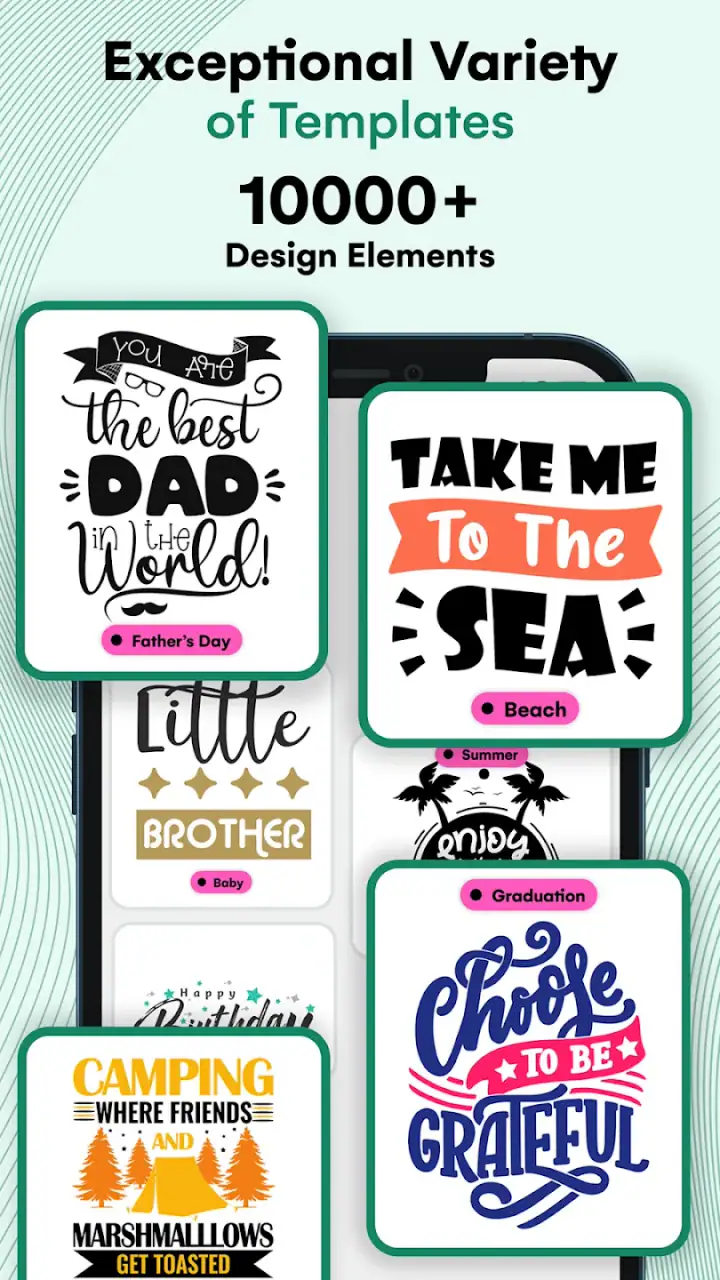
The cut-design idea is especially useful when the artwork needs a clean silhouette. Instead of relying on subtle shading, I would think in terms of strong outlines, distinct shapes, and clear contrast. That approach is less suitable for a painterly galaxy with delicate color transitions, but it works well for a bold emblem or a playful space illustration.
Use the phone as a planning tool
I would not treat the mobile screen as the final judge of a design. A phone makes it easy to zoom in and admire tiny details, yet a mug is normally seen from farther away and at changing angles. A better habit is to repeatedly zoom out and ask whether the main idea still reads. If it disappears at a smaller view, the composition probably needs simplification.
Another helpful check is to imagine the handoff. If I were sending the design to a friend who will print it, would that person immediately understand which part is the front-facing focal point? If I were using it as a personal project, could I recognize the intended theme without explaining it? These questions expose weak layouts before time is spent polishing them.
The most useful result comes from designing for the final object rather than decorating a blank screen. That sounds obvious, but it changes everything from the scale of the main subject to the amount of text and empty space I keep in the composition.
Prepare the handoff carefully
A design app is only one stage in the process. Once the artwork looks finished, there is still a handoff to consider: perhaps I am showing it to a friend, saving it for later, or passing it to someone responsible for making the physical mug. I would inspect the image at normal viewing size before sharing it, because tiny gaps and crowded edges are much easier to notice during this final review.
I would also send a clear explanation with the design. A short note describing the intended front, the preferred background, and the important text can prevent misunderstandings. This is particularly valuable when the recipient is not looking at the project inside the app and has to interpret a single finished image.
For a personal workflow, I would keep a version with fewer decorative elements alongside the more elaborate version. The simpler one is often the safer choice for a physical product, while the detailed one may look better as a digital preview. Having both gives me flexibility without forcing the same composition to serve two different purposes.
What the finished result does well
When the concept is kept focused, the result can feel surprisingly personal. A small space motif is enough to turn an ordinary mug into something recognizable, and the design process is less intimidating than opening a broad professional editor with dozens of unrelated tools. I can see this being useful for a casual gift, a themed desk item, a school art exercise, or a quick visual idea that I want to test before investing more time elsewhere.
The app also suits people who enjoy making designs through arrangement and selection rather than drawing every line manually. That distinction is important. Someone who wants to sketch freely, paint textures, or build a detailed character from scratch may find the experience too limited. Someone who wants a clean, themed composition with a practical destination is more likely to appreciate its boundaries.
Its audience is reflected in the store response: the app has a 4.4 average from roughly seven hundred ratings and has passed one hundred thousand installs. Those figures suggest a healthy level of interest, but they do not change the central question I would ask before installing it: do I want a focused space-design maker, or do I need a general-purpose art studio?
Where the workflow starts to break
The biggest limitation is the gap between a quick design concept and a production-ready professional file. If I need precise control over print dimensions, advanced layers, detailed typography, color management, or complex illustration work, I would choose a more specialized editor. This app makes the first creative step easier, but it should not be mistaken for a complete replacement for those tools.
There is also a trade-off in the themed approach. Space art gives the app a clear identity, yet it may feel repetitive if my projects have nothing to do with planets, stars, or related imagery. Even when the design can be adapted to a different idea, the experience is most natural when I am comfortable working within that visual direction.
The optional purchases deserve attention as well. I can start for free, but the range from $0.99 to $99.99 per item means I would look carefully at each purchase screen before confirming anything. A casual user may never need to spend money, while a frequent creator could be tempted by additions that are useful only for a particular project. My advice is to finish a small test design first and decide whether the free experience already covers the kind of work you actually make.
Performance expectations should also be realistic on older hardware. Android 8.0 is the minimum operating system, but compatibility alone does not tell me how comfortable a design session will feel on every phone. On a smaller or older device, detailed editing may be less pleasant simply because the screen gives me less room to judge spacing and balance. I would use short sessions and save progress rather than attempting a large project in one sitting.
Who should install it
I would recommend it to a beginner who wants a friendly entry into mug design, a parent looking for a simple creative activity, or anyone who likes space art and wants to turn that interest into a personal object. It is also a sensible choice for testing several visual directions before asking a print service or a more experienced designer to refine one of them.
It is less suitable for an illustrator who needs a blank canvas and unrestricted brush control. I would also skip it if my main goal were professional branding, exact production specifications, or a large collection of unrelated design styles. In those cases, a full vector editor or illustration app would offer better control, even if it took longer to learn.
For a realistic everyday example, imagine that I want a small birthday gift for a friend who enjoys astronomy. I would make one strong central space symbol, add a brief personal message, check the design at a reduced size, and show the preview to the recipient before sending it for production. If the message becomes hard to read or the artwork feels crowded, I would remove decoration rather than keep adding detail. That workflow uses the app where it is strongest: quick, personal, visually clear ideas.
My recommendation after using the full workflow
Design Maker For Space Art works best as a focused creative starting point. It helps turn a vague idea into a themed design, especially when the intended outcome is a mug or another small personal item. I like that it gives beginners a concrete goal, and I appreciate the way its space-oriented style can make a simple project feel distinctive.
I would approach it with modest expectations. The free entry point makes experimenting easy, but optional purchases can become significant, and the app does not replace a professional design environment. The smartest workflow is to begin with a simple composition, inspect it as a physical object rather than only as a phone image, prepare a clear handoff, and keep a simplified backup version.
For casual makers, gift projects, and space enthusiasts, that is enough to make the app worth trying. For demanding print work or unrestricted digital illustration, I would move to a more capable alternative. In my view, its value comes from reducing the distance between an idea and a usable themed design—not from trying to do everything.
Cards released the app on November 8, 2023, and its Everyone rating makes it broadly approachable. With its current version at 13.1.0 and free installation, I see little risk in testing a small project first. Just remember that the best outcome depends as much on simplifying the idea and planning the final handoff as it does on the app itself.
FAQs for Design Maker For Space Art
What is Design Maker For Space Art?
Design Maker For Space Art is a creative design application focused on producing space-themed artwork, posters, wallpapers, social media graphics, and other visual projects. It typically combines ready-made templates, cosmic backgrounds, decorative elements, text tools, and editing controls so users can create designs inspired by galaxies, planets, stars, astronauts, and futuristic space scenes without needing advanced graphic-design experience.
Can beginners use Design Maker For Space Art without design experience?
Yes, the app is intended to be approachable for beginners. Users can usually start with a predesigned space template and customize its text, colors, images, and decorative elements rather than creating everything from an empty canvas. Some experimentation may be needed to understand the editing interface, layering options, and export controls, but basic posters and artwork can generally be made with only a few taps.
What types of projects can be created with the app?
Design Maker For Space Art can be useful for creating a variety of cosmic-themed visuals, including phone wallpapers, inspirational quote images, event posters, profile pictures, thumbnails, invitations, and social media posts. The exact possibilities depend on the available templates and editing tools, but the app is best suited to projects where galaxies, planets, stars, rockets, science-fiction imagery, or futuristic typography are central to the design.
Does Design Maker For Space Art work offline?
Some editing functions may be available offline after the application and its included resources have been installed, especially when working with locally stored templates, backgrounds, and stickers. However, internet access may still be required to download additional design assets, display advertisements, access online content, or share finished work through other services. Availability can also vary by device, app version, and the developer’s current content system.
Is Design Maker For Space Art free to download and use?
The application may be available as a free download, but users should review its store listing carefully because free apps can include advertisements, optional purchases, premium templates, or locked editing features. Before beginning a project, check whether the selected assets require payment and confirm the export conditions. It is also wise to review requested permissions and the app’s privacy information before installing it.
Pros
- Easy-to-use tools for creating colorful space-themed artwork
- Good variety of planets
- stars
- galaxies
- and cosmic backgrounds
- Useful for beginners who want quick results without drawing skills
- Supports creative experimentation with different space compositions
- Suitable for making wallpapers
- posters
- and social media images
Cons
- Some advanced design options may require in-app purchases
- Artwork can feel repetitive if you use only the included space assets
- Complex scenes may take time to arrange neatly on a phone screen
- Export quality may vary depending on the selected canvas size
- Limited appeal for users looking for non-space design templates


